
Finding telling time worksheets that keep students engaged can make a big difference when you’re teaching this important second grade math skill. Learning to tell time is exciting, but it can also be one of the more challenging concepts students encounter. Reading an analog clock requires several skills working together, and many children need lots of opportunities to practice before everything clicks.
The good news is that with consistent review and meaningful practice, students can build confidence one step at a time.
Why Telling Time Can Be Tricky
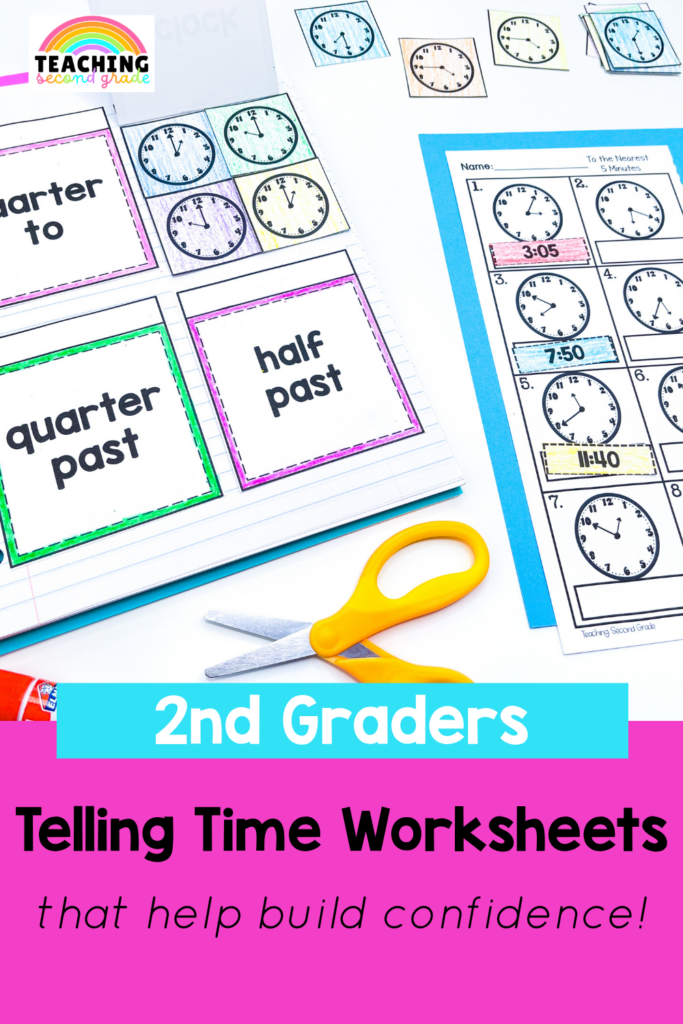
Unlike some math skills, telling time isn’t something students usually master after one lesson. They have to understand what each hand on the clock represents, count by fives around the clock, and connect what they see on an analog clock to a digital one.
That’s a lot to process, especially for young learners who are still building number sense.
If your students seem to struggle, don’t worry. It’s completely normal. Regular practice throughout the year is often much more effective than teaching telling time during one unit and moving on.
Tips for Teaching Telling Time
One of the best ways to help students succeed is by introducing new concepts gradually. Start with telling time to the hour before moving on to half hours, quarter hours, and five-minute intervals.
You can also make learning more meaningful by connecting time to your students’ everyday routines.
Try asking questions like:
- What time do we eat lunch?
- What time does recess begin?
- What time do we go home?
- What time does our reading block start?
These simple conversations help students realize that telling time is something they use every single day.
Hands-on activities like mini clocks, matching games, and classroom schedules are also great ways to reinforce learning before students practice independently.
What to Look for in Telling Time Worksheets
Not all telling time worksheets provide the same kind of practice. The most effective ones give students opportunities to apply the skill in several different ways instead of completing the same type of problem over and over.
Look for worksheets that include practice such as:
- Reading analog clocks
- Writing the matching digital time
- Drawing clock hands
- Identifying AM and PM
- Matching analog and digital clocks
Variety keeps students engaged while helping them develop a deeper understanding of how time works.
It’s also helpful to have different levels of practice available. Some students may still be mastering the hour and half hour, while others are ready for five-minute intervals or more challenging review.
Building Confidence Through Consistent Practice
Like reading or math facts, telling time becomes easier with repetition.
Instead of practicing only during your time unit, look for small ways to review throughout the school year. Read the classroom clock together during morning meeting, talk about the schedule for the day, or include a quick clock question during your math warm-up.
These small moments only take a few minutes, but they help students retain what they’ve learned.
As students begin recognizing time in their everyday lives, they’ll also start to understand why the skill matters. That’s often when their confidence really begins to grow.
Make Telling Time Practice Easy
If you’re looking for printable telling time worksheets that provide meaningful practice without adding extra prep to your day, this resource was created with busy teachers in mind.
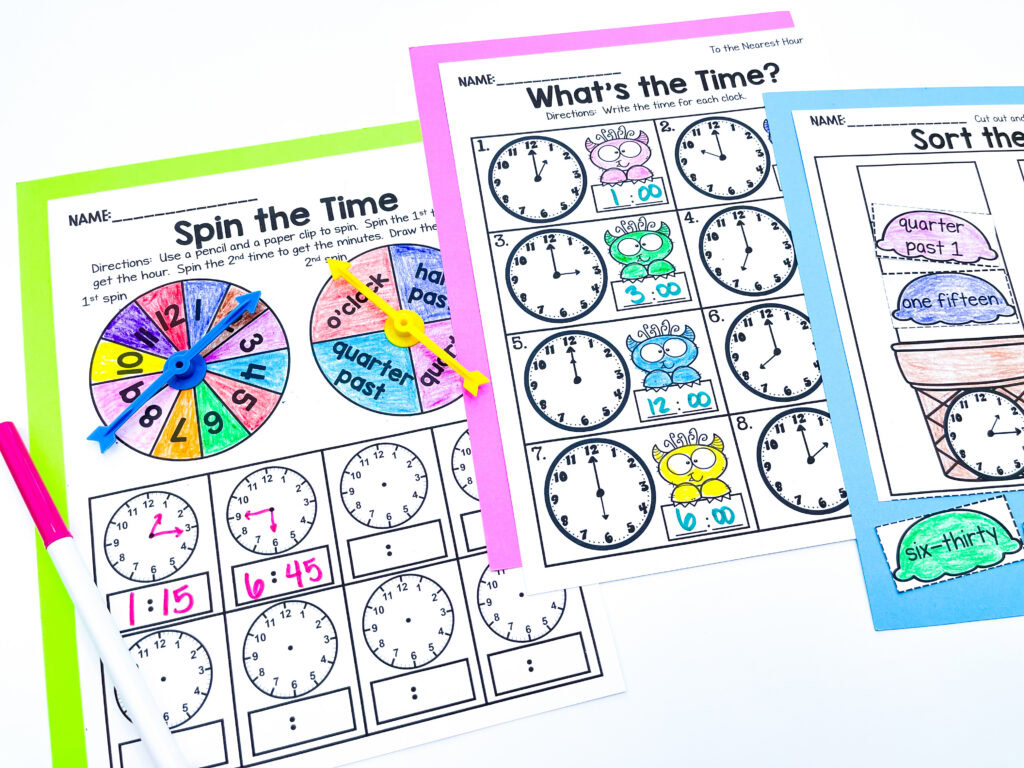
With 75 printable pages, students have multiple opportunities to practice reading analog clocks, drawing clock hands, matching analog and digital time, elapsed time, and strengthening the skills they need to become confident clock readers.
Whether you’re planning whole-group instruction, math centers, independent work, homework, or small group intervention, these worksheets fit easily into your classroom routine while giving students the repeated practice they need to be successful.
Teaching time doesn’t have to feel overwhelming. With consistent instruction, engaging activities, and plenty of opportunities to practice, your students will develop the confidence they need to master this important life skill.